


This Parliament is five months old and already circling the drain. The Liberals will table their budget on November 4th, and it’s going to fail – not because of scandal or surprise, but because the math, the momentum, and the mood have all turned.
Even the government’s own House Leader, Steven MacKinnon, is already setting the stage, accusing the opposition of “being cavalier” with the country’s future – the warning you give when you know what’s coming.
The numbers don’t lie. The Liberals hold 169 seats. The Conservatives have 144, the Bloc 22, the NDP 7, and the Greens 1. That’s 169 for the government, 174 against. It takes 172 to survive a confidence vote. The Liberals are already outnumbered.
Back in the spring, right after the election, everyone was still in a cooperative mood – as is often the case after voters deliver a minority. The Bloc even promised a year of peace, and a handful of early bills sailed through with Conservative support. It feels like a lifetime ago.
Now, every opposition party has its own reason to vote no to the budget – and every one of them stands to gain by doing it.
The Bloc Québécois has already dropped its annual demand list – $814 million in carbon rebates, higher health transfers, new housing funds, and special tax treatment for Quebec – and the Liberals have already said no. They’ve staked out demands the government can’t meet, and they know it. That’s not negotiation; it’s stage-setting.
The Bloc’s entire purpose is to remind Quebecers that Ottawa doesn’t work for them, and that only the Bloc stands up for their interests. Every budget fight is a chance to prove that point. They’ll call their no vote “defending Quebec’s fair share,” but it’s also about momentum. With their provincial cousins in the Parti Québécois leading in the polls, a federal campaign gives the Bloc a megaphone to reinforce that nationalist current and keep themselves central to Quebec’s political story. They may control the balance of power in committees, but visibility is their lifeblood – and an election gives them more of it.

The NDP can’t afford to keep propping the Liberals up, and interim leader Don Davies knows it. He’s already said outright that they won’t support an “austerity” budget. And that word matters. Carney himself used it to describe the government’s upcoming plan – before his team quickly walked it back. The damage was done. Liberals now call it an “affordable and ambitious” budget, but everyone in Ottawa heard the first version.
For New Democrats, that label is political poison. They can’t be seen standing behind cuts. They tried cooperation once and were punished into irrelevance with only seven seats, no status, no staff, no oxygen. Another vote for the Liberals could finish them off. Defeat the budget, though – that’s their lifeline.
A snap election would let them reset – and they may not have a permanent leader, but no leader is better than the last leader. Their seven seats are safe, and the path forward is straightforward: hold what they have and add five more. That’s all it takes to regain official party status, funding, and relevance. Stay put, and they could spend years in the wilderness. Roll the dice now, and they could turn that rebuild from years into months. The NDP have always excelled at ground game – skip the national sprawl and zero in on those five pickups.
But there’s a darker calculation now taking shape inside the party: abstention. It’s like a union walking away from the bargaining table and letting management decide what everyone’s worth. If the NDP abstains on the budget vote, they aren’t just dodging responsibility – they’re endorsing a budget that contradicts everything they claim to stand for. It would make one wonder why they exist at all. A party that chooses silence on principle doesn’t have any.
And with a leadership race already underway, that choice could open a fresh wound. The contenders outside caucus will seize on it, accusing the parliamentary wing of losing its spine and its soul. It would expose just how fractured the NDP has become – a party too weak to oppose, too scared to fight, and too divided to matter.
The irony is that an election wouldn’t even interrupt their leadership race. They’re not competing for government; they’re competing for relevance. And that’s why abstention wouldn’t just be cowardly – it would be suicidal.
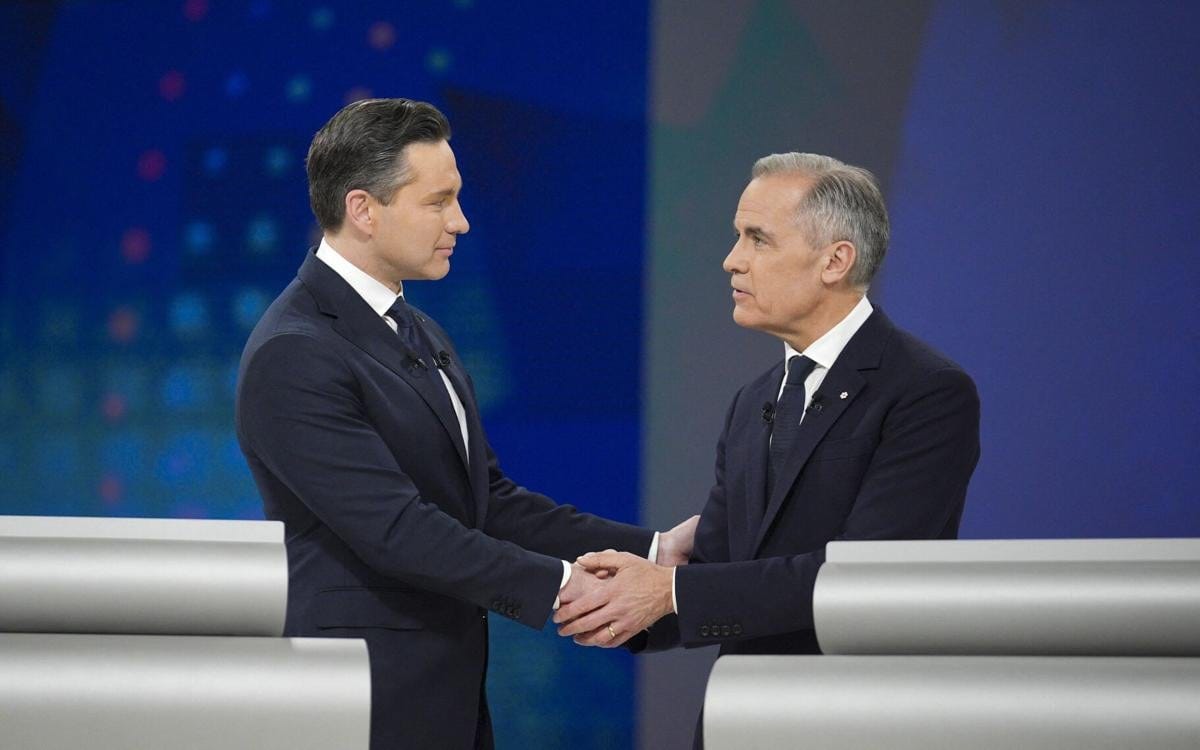
Then there are the Conservatives – and for them, voting no isn’t even a question. They’ve spent months painting Mark Carney as Trudeau 2.0, or worse, and their base despises this government. They can’t back a Liberal budget they see as stuffed with deficits, gimmicks, and half-measures. Carney and Poilievre even met privately last week – a polite, unproductive chat that made their differences plain. Poilievre wants tax cuts and a hard $42-billion cap on the deficit. Carney’s already signalled he’ll blow past that. The lines are drawn.
The Conservatives believe Carney’s biggest weakness isn’t actually policy – it’s communication. He knows his numbers, but his message is mush. His national address last week – a rare prime-time speech – was supposed to inspire Canadians. Instead, it inspired eye-rolling. Big words, vague gestures, no conviction. Poilievre’s team believes they can run circles around that. Their communications machine is ruthlessly quick, clear, and emotional – the opposite of Carney’s technocratic tone. Combine that with a full war chest and a disciplined ground game, and the Conservatives could see this election as theirs to lose.
Conservatives will hammer one point relentlessly: Carney was elected to manage Trump. Yet despite the smiles and small talk in the Oval Office, there’s still no deal, no progress, and no clarity on trade. He was supposed to be the steady hand who could manage Trump. Instead, he looks stalled. What was once his greatest advantage is quickly turning into his biggest vulnerability. Poilievre will use the campaign to expose that gap – between what Carney promised and what he’s delivered – while proving his party can communicate where the Liberals can’t. The Conservatives would start strong on that message, before quickly pivoting to what most Canadians actually care about: affordability and crime.
And with Poilievre’s leadership review in January, he can’t afford to look weak by not going full tilt against this budget. Every Conservative MP will vote no. Even abstaining would be seen as betrayal.
And let’s be honest – abstaining doesn’t fool anyone anymore. MPs can vote from their phones. A missing vote is a vote for the budget. No opposition party can afford that kind of softness in this climate.
There is, of course, one procedural wrinkle. Opposition parties could technically allow the budget to pass “on division” – meaning it would be declared adopted without a recorded vote. It’s a convenient trick for pretending to oppose something while quietly letting it through. That might work for other legislation or committee reports, but not for a budget. Not for a confidence vote. If you have the numbers to defeat a government and choose not to count them, you haven’t opposed it – you’ve protected it. And everyone would see it for exactly what it is.
Which brings us to the Liberals. Cornered, yes, but not blind. Canadians still like Mark Carney. They see him as calm, competent, and internationally respected – the grown-up in the room. An Ipsos poll last month gave him a 58 per cent approval rating, the highest for the party in a decade. And though progress with Trump has been slow, Carney has managed what few leaders can, a functioning relationship with a man most of the world finds impossible. Those talks are mostly behind closed doors, and while there’s little public proof of movement, it’s entirely possible a deal is quietly taking shape.
Carney insists his coming budget will be “affordable and ambitious” – a line meant to reassure both markets and voters – but even within his caucus, there’s nervous laughter. When the government’s own messaging sounds like it was written by a central banker, it’s usually because it was.
The Liberals will frame a potential election as reckless and unnecessary, but deep down, every minority government wants the same thing – a majority.
So if the budget looks to fail, don’t expect them to fight too hard to stop it. They’ll walk into a campaign saying “We’re getting things built. We’re close to a deal with Washington. But to finish the job, we need a stable majority.” And if Canadians still believe Carney is a steady hand at the wheel, they might just give him one.
Because make no mistake – this isn’t collapse. It’s calculation.
The Bloc wants to prove Ottawa will never deliver for Quebec. The NDP wants distance. The Conservatives want blood. And the Liberals? They want a majority.
This Parliament is finished. The math doesn’t work.
So, yes – brace yourself.
We’re headed to an election.
Fred DeLorey is a seasoned political strategist, crisis communication expert, and influential writer with an extensive background in government relations and campaign management.