
When a politician’s reputation takes a nose dive, the script that follows is often familiar: a whispered affair, misstep in judgement, or just a silly accident. The publicist’s role might have been simpler than calming the media storm, helping write an apology, or suggesting a resignation. In today’s society of social media surveillance. Where every headline, video, or incriminating photo can spiral out of control within the hour, the traditional playbook just does not work.
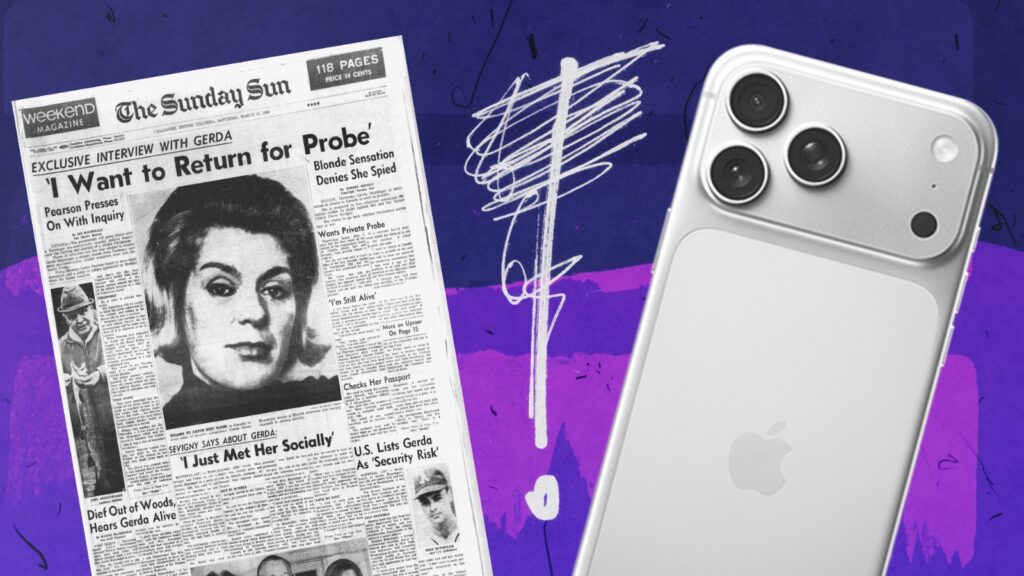
Take the Munsinger Affairs in the 1960s as a historical example of what we will call classical public relations. This was one of Canada’s first major political sex scandals, involving Gerda Munsinger and allegations of espionage with it. German immigrant, Gerda Munsinger, who had a shadowy past and was romantically involved with several federal politicians was a story at the core of Cold War paranoia.
The public was hungry for truth, the political playbook leaned heavily on secrecy and disclosing information carefully. Seeking to contain damage through a veil, limited media questions, and emphasizing the importance of protecting institutional reputations. Faced with explosive media scrutiny when the story broke, the governing party was defensive, downplayed the significance and framed it as just another incident.
Crisis management then relied on the media cycle and under the thought that a scandal could be washed away by a control of information released and ambiguity. The media cycle they relied on was slow and today it is faster than ever before.
It takes a journalist all of five seconds to write a tweet with a damning photo store on their phone. The spread of information is faster, algorithms pushing the content to thousands, retweets only taking seconds, people coming to conclusions and doing their own investigations on social media. It is even faster now in the era of AI slop. It takes someone a few minutes on Sora to create a video, even faster to make a meme. The speed at which information is exchanged today is unprecedented, and public relations is shifting to mirror that.
Consider the explosive scandals you have seen. In the dawn of modern ubiquitous social media, the 2013 Rob Ford scandal was huge. All it took was one video, one upload, and the video was in every outlet and all over the internet. There was no timeline to coordinate a response, build a narrative, or select information to release. The evidence was right there and it was taken easily from a cellphone.
The story played out in real time: the mayor appeared on television, acknowledged it, and then media outlets maintained relentless coverage. The speed of information was impossible to keep up with, it was so new for public relations professionals. Information was not only leaked to journalists, but with the internet, any hobby investigator with an internet connection and a cellphone could go searching.
Ford’s communication team appeared disoriented, taking a huge shift from denial to confession and the ensuing chaos. His abrupt, public admission, was a collapse of the PR denial strategy in Canada and an embrace of personal accountability.
In a CBC interview, Patrick Gossage, Pierre Trudeau’s press secretary said he performed the “final mea culpa” and emphasized the brilliance of the approach. With Mark Sherwin of CorpWorld on the same article saying that delaying his confession did damage, and that the confession made him seem more human.
The Rob Ford video revealed a lot about the new media environment and its impact on political scandals in Canada. How nothing remains private and the unforgivingness of social media platforms.
In an era of universal social media presence, the concept of privacy has become almost obsolete for public figures. Every moment, misstep, or private conversation has the opportunity to be immortalized and broadcast worldwide in seconds. We all have phones that are able to capture the HD video and broadcast it within seconds. Platforms like Twitter, Instagram, and TikTok empower anyone with a smartphone to capture these moments, rewarding them with engagement. Public figures are now exposed to relentless public scrutiny and the boundaries between public and private have been blurred.
The real news is not even posted through legacy media anymore. Information comes through alternative news sources and Rob Ford is a great example of that. The video of him smoking crack cocaine was posted on Gawker.com before it was in the tabloid. Alternative news sources have fundamentally changed the way political scandals are exposed and understood. Bypassing the traditional gatekeepers, editors and journalists, and accelerating the exchange of information. Information is not vetted anymore, it is just posted. Whether it is correct or not, social media allows anyone to have a platform and anyone to have their message seen by millions.
Alternative platforms circumvent institutional caution and have created a political environment where the real conversation is not heard from the major sources. The real conversation is where the alternative news is. Online forums, instagram accounts, and twitter pundits, are all the modern newsroom.
Rob Ford was only the beginning, and the industry has grown. Since 2013, public affairs professionals have studied, internalized, and adapted to the realities of rapid-fire social media. What was once chaotic and only chaotic, is now able to be navigated.
Now we are in the age of cancel culture and the stakes have never been higher. Reputation management is no longer reliant on trickling information out to the press, or managing journalists, it is about managing armies of online sleuths, meme-makers, and influencers who can turn a slip-up into a crisis.
The mistakes of politicians are not just news or a moral discussion of their character, they are content. Content that is amplified forever on social media, turned into a global meme, and reputational repair requires more than before. Crisis management demands genuine engagement with the public, not just with journalists. It used to be about what a journalist with a platform will say and now it is about what thousands of onlookers online will say. Crisis management is as much about reading the mood of the internet as it was for dealing with journalists in earlier days.
Authenticity can move mountains. If you are going to acknowledge a mistake, you have to really own it. Rob Ford’s situation demonstrates the concept. He really owned his mistake. He came out and told the press: “Yes, I have smoked crack cocaine.” Then went on to win a seat as a councillor after being forced out of his role as mayor. All it took was authenticity.
In an era of AI slop, there is vast amounts of content generated with minimal authenticity everywhere. Authenticity is scarce in the modern digital landscape. We have floods of superficial videos, press releases, and AI voiceovers, content often created to check boxes rather than communicate with genuine intent. Authentic moments are rare and that makes them valuable, especially in the context of public relations.
People deeply crave truth and real connection, and can quickly detect when a message is not genuine. Audiences can tell if a politician is reading off a rehearsed speech written by their office or hiding behind polished rhetoric and slogans. Rob Ford’s candid admission was powerful not because it was a confession but because it was a truth in a sea of constructed narratives. His openness made him relatable, and most importantly made him more human.
The emergence of ubiquitous social media and cancel culture have created an unpredictable storm at unimaginable speeds. The challenge is not to hide the information, the information will get out, but it is to cut through the noise of the masses. To acknowledge errors and move forward with a chance at rewriting and flipping the script.
Modern public relations does not require constructed narratives, controlled flow of information, or secrecy. Authenticity is the only necessity. Authenticity is one of the most important assets in navigating public opinion.
Jeff Ballingall is the founder of Mobilize Media Group.